
 Posted by
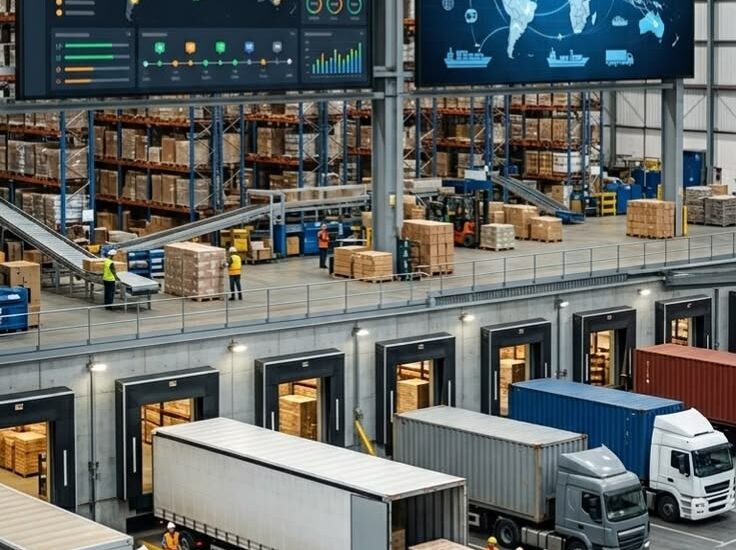
 I have spent a fair amount of time thinking about logistics lately, and I have come to a conclusion that probably sounds strange to most people. This industry almost never gets discussed with any real enthusiasm. That bothers me, because I cannot name another field that quietly holds up so much of modern commerce. Every single product that reaches a shelf, a warehouse, or a front porch got there because somebody planned procurement, storage, and transportation well enough that the whole process felt invisible.
That invisibility is the entire point, and it is also the reason logistics gets so little credit. I remember touring a distribution center a few years back and being struck by how much work happens before a single box moves. People were negotiating with suppliers, mapping out warehouse layouts, and rerouting shipments in real time. It looked boring from the outside. It was anything but.
According to the U.S. Bureau of Labor Statistics, logisticians coordinate an organization’s supply chain and oversee the life cycle of a product from purchasing through distribution (U.S. Bureau of Labor Statistics, 2025). That description sounds narrow when you read it on paper, but in practice it touches nearly every function of a business. Procurement negotiates with suppliers. Warehousing decides how inventory gets stored.
Transportation determines how quickly and cheaply goods move from one point to the next. A weak link anywhere in that chain shows up everywhere else, usually as an empty shelf or an angry customer. So here is the argument I want to make. Logistics deserves to be treated as a strategic function, not an operational afterthought. Businesses that keep it siloed in the back office are making a costly mistake, and I will die on that hill.
The employment data backs up how central this work has become. The Bureau of Labor Statistics projects that logistician employment will grow 17 percent between 2024 and 2034, a rate far faster than the average for all occupations, with roughly 26,400 openings expected each year as the field expands (U.S. Bureau of Labor Statistics, 2025). Does that sound like a function companies consider optional? It does not to me.
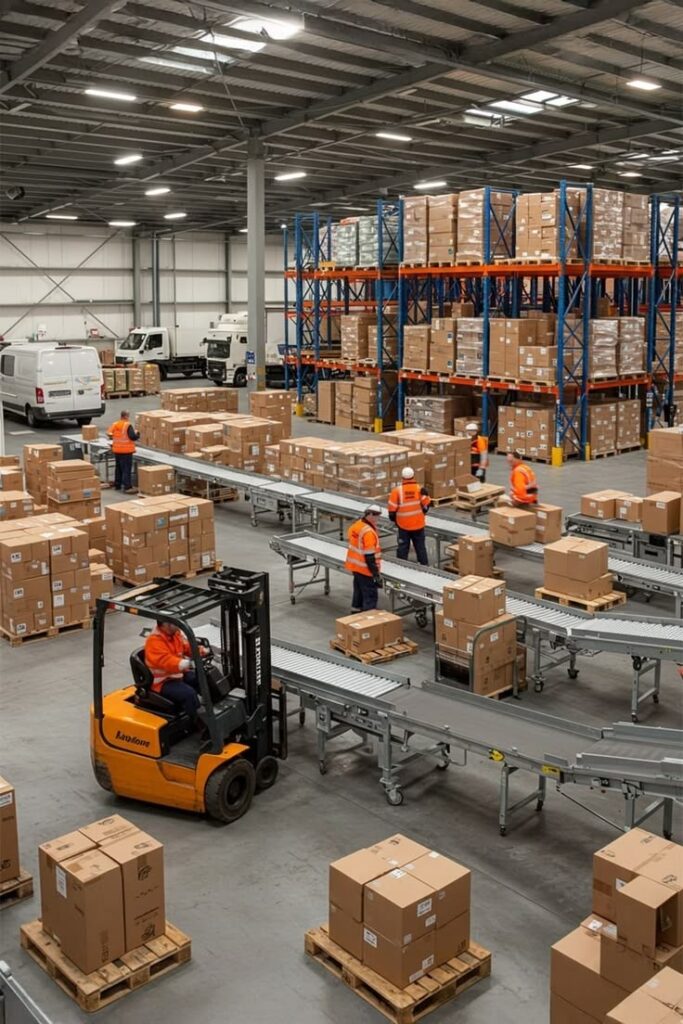
Pay data tells a similar story. Logisticians working in the federal government earned a median wage over one hundred thousand dollars in 2024, and the field overall carries a healthier median wage than the typical business operations role (U.S. Bureau of Labor Statistics, 2025). Organizations are not paying that premium for people who simply track boxes. They are paying for people who can prevent a supply chain disruption before it happens.
That is a genuinely strategic skill, and I think more business owners need to recognize it. Where I think many smaller businesses go wrong is treating logistics as a cost center to minimize rather than a capability to invest in. I have watched companies cut corners on inventory software, warehouse organization, and supplier relationships to save a few dollars. That strategy tends to work right up until a shipment gets delayed or a supplier runs out of stock with no backup plan in place.
At that point, the savings disappear fast, along with customer trust. Have you ever waited three weeks for something that was supposed to arrive in two days? That is what poor logistics feels like from the outside. The field also spans a wider range of work than people expect. It covers transportation, warehouse operations, supply chain management, and global sourcing (Purdue Global, 2026). That breadth means there is no single fix for a struggling logistics operation. It requires someone thinking across the entire chain, not just the piece directly in front of them.
I learned that lesson the hard way when I assumed a shipping delay was a carrier problem. It turned out the real issue started weeks earlier with a purchasing decision nobody had questioned. If your business has grown past the point where you can track inventory in your head, it has grown past the point where logistics should be an afterthought. Treat it as a real function with a real budget.
Give it a seat at the table when big decisions get made. Do that, and the invisible parts of your business will stay invisible for the right reasons. Not because nobody is paying attention, but because somebody finally is.
One more thing worth saying, and I mean this sincerely. I used to think logistics was just trucks and warehouses and spreadsheets, a necessary evil that kept the machine running.
The longer I pay attention to it, the more I see it as the thing that decides whether a business keeps its promises. Anyone can make a promise to a customer. Logistics is what makes that promise real, day after day, without applause and without anyone noticing. So the next time an order shows up exactly when it was supposed to, take a second and appreciate the quiet backbone that made it happen. Then go check on your own supply chain, because it probably needs you.
References
U.S. Bureau of Labor Statistics. (2025). Occupational outlook handbook: Logisticians. U.S. Department of Labor. https://www.bls.gov/ooh/business-and-financial/logisticians.htm
Purdue Global. (2026). What is a logistician? https://www.purdueglobal.edu/blog/business/what-is-logistician/
U.S. Department of Energy. (n.d.). Career map: Logistician. https://www.energy.gov/node/3563447