
 Posted by
 Struggling with time management? Discover honest, real-world tips on prioritizing tasks, time blocking, and setting boundaries that actually work well. I used to think time management was something other people were good at. You know the type. The ones with color-coded planners and a morning routine that starts before the sun even thinks about coming up. For years, I told myself I was just not built that way, that I was a creative person and creative people cannot be boxed into schedules. Looking back, that was a pretty convenient excuse for a whole lot of missed deadlines and frantic midnight scrambling.
What changed my mind was not a fancy productivity app or some guru on a stage. It was a Tuesday, a bad one, when I forgot a client call because I had it written on a sticky note that fell behind my desk. That sticky note is basically the mascot of my old approach to time management. I did not have a system. I had hope, and hope is not a strategy.
Good time management skills start with something so simple it almost feels insulting to write down, and that is knowing where your time actually goes. Not where you think it goes. Most of us are wildly optimistic about how long a task will take, and then we wonder why the day evaporated. I started tracking my hours for one week, just jotting down what I did in rough thirty-minute chunks, and the results embarrassed me a little. Do you know how much time disappears into checking email over and over instead of just checking it twice a day? I did not, until I saw it in black and white.
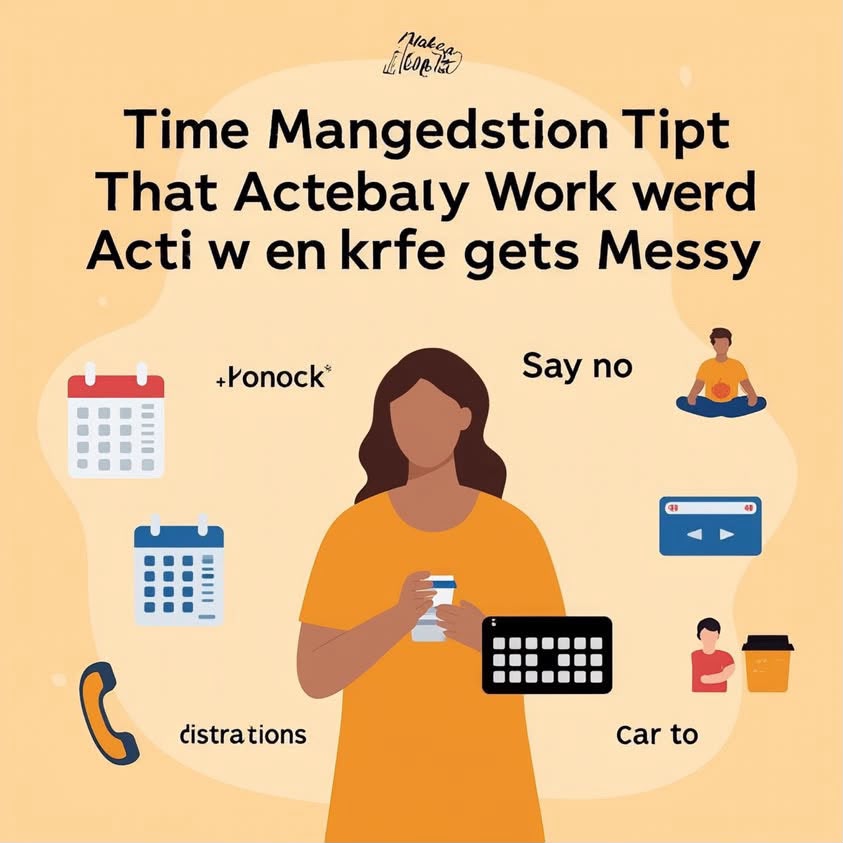
Once I had that picture, prioritizing tasks became a lot less mysterious. I stopped treating my to-do list like a random pile of obligations and started asking a simple question before adding anything to it. Does this actually move something important forward, or does it just feel urgent because it showed up in my inbox with an exclamation point? Urgent and important are not the same thing, and confusing the two is probably the single biggest time management mistake I made for years.
Time blocking is the other piece that made a real difference for me, and I say this as someone who resisted it for a long time because it sounded rigid. It is not rigid, or at least it does not have to be. I now give chunks of my calendar over to specific kinds of work, writing in the morning when my brain is sharpest, meetings clustered in the afternoon, and a buffer zone late in the day for the stuff that always runs long. The buffer is honestly the trick nobody tells you about. Without it, one delayed call knocks over every other block like dominoes, and suddenly you are eating dinner at your desk again.
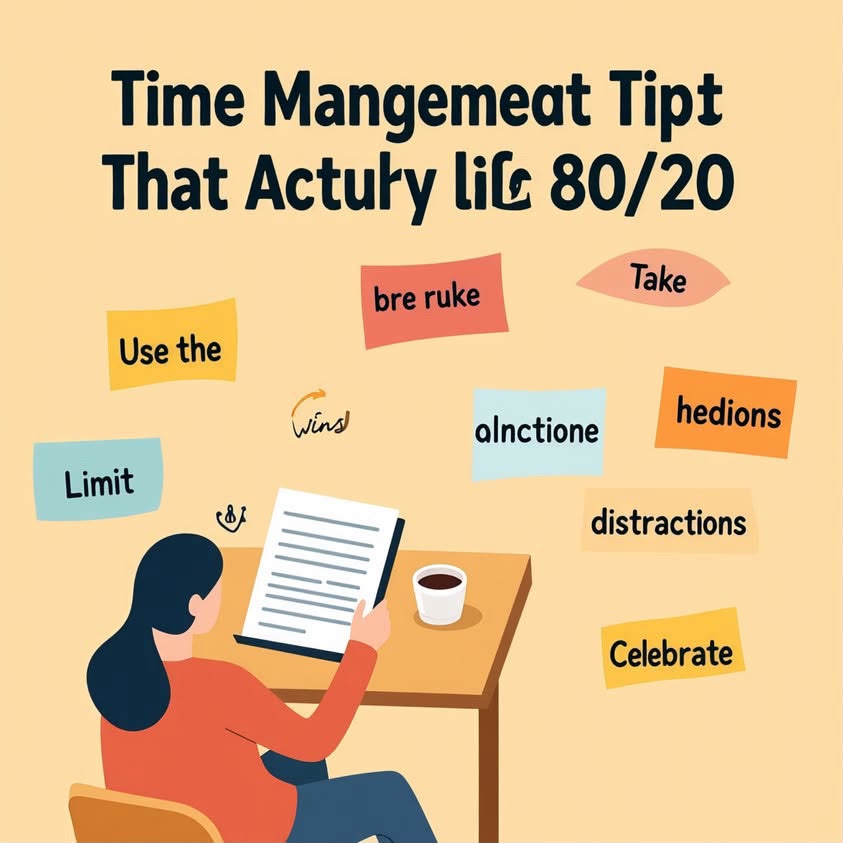
I want to be honest here, because this is not a story about becoming a flawless productivity machine. I still procrastinate. I still open a browser tab to look up one thing and end up reading about the history of the Roman aqueduct system forty minutes later. The difference now is that I notice it faster, and I have built in enough slack that one derailed afternoon does not wreck my whole week. Effective time management, at least the version that works for actual humans, is less about perfection and more about building a system that can absorb your inevitable mess-ups.
Setting boundaries around my time has mattered just as much as any calendar trick. Saying no used to feel almost rude to me, like I was letting someone down by protecting my own schedule. But every yes to something unimportant is a quiet no to something that actually matters, whether that is a project, a client, or, honestly, just my own evening. Learning to say no politely but firmly freed up more hours than any app ever did.
There is also something to be said for rest, which sounds like a strange thing to bring up in an article about productivity, but stay with me. Burnout does not sneak up on you slowly; at least it did not for me. It arrived fast, after months of treating my calendar like a battlefield to be conquered rather than a tool to help me live well. Now I build in actual breaks, not the kind where I scroll my phone for five minutes, but real ones, a walk outside or a proper lunch away from my laptop. Rest is part of good time management, not the enemy of it.
If you take one thing away from this, let it be that time management is not about squeezing more tasks into your day like some kind of grim personal challenge. It is about spending your hours on what genuinely matters to you, whether that is your work, your family, or that hobby you keep saying you will get back to someday. I am still figuring this out, honestly, tweaking my system every few months as life throws something new at me. But I no longer live at the mercy of a sticky note that fell behind my desk, and for me, that already feels like a win worth mentioning.
Reference
Centers for Disease Control and Prevention, National Institute for Occupational Safety and Health. (1999). Stress at work (DHHS Publication No. 99-101). https://www.cdc.gov/niosh/docs/99-101/default.html
Macan, T. H., Shahani, C., Dipboye, R. L., & Phillips, A. P. (1990). College students’ time management: Correlations with academic performance and stress. Journal of Educational Psychology, 82(4), 760–768. https://doi.org/10.1037/0022-0663.82.4.760
Miertschin, S. L., Goodson, C. E., & Stewart, B. L. (2015). Time management skills and student performance in online courses. In Proceedings of the 2015 ASEE Annual Conference & Exposition (pp. 26.1585.1–26.1585.13). American Society for Engineering Education. https://doi.org/10.18260/p.24921