
 Posted by
 I want to push back on a narrative I hear constantly from small business owners. It is the one about government regulation being mostly an obstacle standing between them and growth. And honestly? I get where the frustration comes from. Have you ever tried to read a federal compliance document cover to cover? It is not exactly bedtime reading. But after spending some time digging into how these rules actually get written and enforced, I have landed on a conclusion that might surprise you.
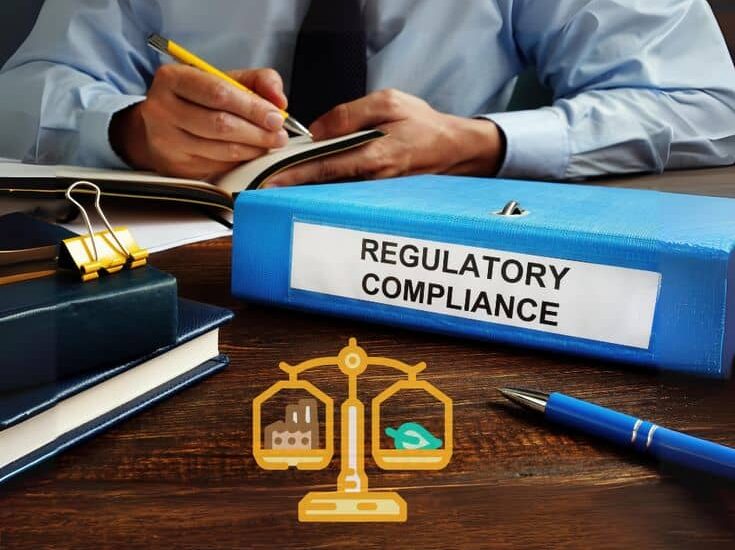
Government regulations might feel like red tape, but for small business owners, they often serve as a crucial shield against larger competitors here is why. The truth is that well-designed regulation is not the enemy of small business. It is frequently the thing protecting small businesses from being crushed by larger competitors with deeper pockets and dedicated legal teams. I know that sounds counterintuitive.
I used to think the exact opposite myself. Let me introduce you to something called the Regulatory Flexibility Act. This is a federal law that requires agencies to specifically consider how new regulations will affect small entities before they finalize them (Office of Advocacy, U.S. Small Business Administration, n.d.).
This is not some minor technicality that nobody pays attention to. It actually means that when a federal agency writes a new rule, they are legally required to think through whether that rule will disproportionately burden a small business compared to a large corporation with an entire compliance department on speed dial. Then you have Executive Order 13,272, which went a step further.
It directed the Small Business Administration’s Office of Advocacy to train other federal agencies on how to comply with this requirement (Office of Advocacy, U.S. Small Business Administration, n.d.). That is a meaningful structural check that most business owners never hear about, precisely because it works quietly in the background. I find that kind of fascinating, honestly. The most important protections are often the ones you do not even notice are there.
Size standards are another example worth understanding, because they directly determine whether your business qualifies for programs designed to level the playing field. The Small Business Administration assigns a size standard to every industry code used in federal contracting. Most non-manufacturing businesses with average annual receipts under a set threshold qualify as small for purposes of contracts specifically reserved for smaller firms (U.S. Small Business Administration, n.d.-a).
Without these classifications, small businesses would be competing directly against much larger firms for the same government contracts, with no distinction made for scale. I think it is easy to view any classification system as bureaucratic red tape. I have done it myself more times than I care to admit. But this particular one exists specifically to keep opportunities open for businesses that would otherwise be squeezed out of the market entirely.

I do not want to pretend regulation is costless or always well designed. That would be dishonest. Compliance takes time, and smaller businesses genuinely have fewer resources to dedicate to reading dense federal guidance documents. I have talked to enough business owners to know that the burden is real.
The Small Business Administration itself acknowledges this by publishing compliance guides specifically written to help businesses understand their obligations without needing to hire outside counsel for every question (U.S. Small Business Administration, n.d.-b). The existence of these guides tells you something important. Even the agencies writing the rules recognize that complexity is a real burden, and they are actively trying to reduce the gap between what the law requires and what a business owner can reasonably be expected to understand on their own.
My opinion, stated plainly, is that businesses complaining about regulation in the abstract are usually targeting the wrong villain. The actual problem is rarely the existence of a rule. It is more often unclear guidance, inconsistent enforcement, or a lack of accessible resources explaining what compliance actually requires. Those are fixable problems. And agencies like the SBA are already working on them through compliance guides and small entity outreach.
I remember talking to a friend who runs a small manufacturing shop. He was convinced that environmental regulations were going to put him out of business. Then we actually sat down and looked at what was required. Turns out there were grants and tax incentives available specifically to help small businesses like his cover the cost of compliance. He had no idea. He had been so busy assuming the worst that he never bothered to check what help was actually out there.
If you run a business and regulation feels like an unfair burden, I would encourage you to look specifically at whether protections exist that you are not currently using. Rather than assuming every rule is working against you, take a closer look. Often, the opposite is true. The system is not perfect. I am not going to sit here and tell you it is. But it is also not the monolithic obstacle that some people make it out to be.
There are real safeguards built into the process, from the Regulatory Flexibility Act to the SBA size standards to the compliance guides designed to make everything more accessible. The key is knowing they exist and actually using them. That is the part most business owners miss.
For more detailed guidance on navigating federal contracting requirements, you can refer to the SBA’s official resources on small business regulations. The information is out there. You just have to look for it.
References
Office of Advocacy, U.S. Small Business Administration. (n.d.). The Regulatory Flexibility Act. Retrieved from https://www.sba.gov/advocacy/regulatory-flexibility -act
U.S. Small Business Administration. (n.d.-a). Size Standards. Retrieved from https://www.sba.gov/federal-contracting/contracting-guide/size-standards
U.S. Small Business Administration. (n.d.-b). Compliance Guides. Retrieved from https://www.sba.gov/business-guide/manage-your-business/stay-compliant