

 Posted by
 For a lot of people, an MBA is just a golden ticket to a corner office or a hefty signing bonus. But you know what? I honestly believe it is one of the most underutilized tools for building genuine, lasting wealth, and it kind of bums me out how many graduates let that financial education gather dust instead of using it to supercharge their own personal investment portfolio.
The theories you wrestle with in class, things like Modern Portfolio Theory, are not just abstract concepts designed to fill a textbook. They have a direct, and I mean direct, application to how you should handle your own money. The whole idea of dividing your investments among stocks, bonds, and cash to manage risk, that is the essence of asset allocation, which is a cornerstone of any MBA program. And figuring out the right mix is a deeply personal thing.
It changes depending on where you are in life, your investing timeframe, and your tolerance for those gut-wrenching market dips. Striking that balance between optimizing for growth and preserving your capital is a lifelong journey, and incorporating these portfolio management principles is the key to navigating it successfully.
Where I see a lot of my fellow finance-savvy peers fall short is in the actual practice of diversification. It is not enough to just buy a handful of big-name stocks and call it a day. True diversification is a two-level game. You need variety between asset categories and within them. A properly diversified portfolio should include exposure to different sectors, geographies, and company sizes, not just the tech giants everyone is talking about. I have seen too many people concentrate their personal portfolios heavily in their own industry or, even worse, in their employer’s stock.
I get the loyalty and the confidence, but it fundamentally defeats the purpose. You are essentially betting your career and your savings on the same horse, and that is a risk, even with all the analytical training in the world. If there is one lesson from business school that deserves a second look, it is that concentration creates vulnerability, and vulnerability is the enemy of long-term wealth building.
Then there is the elephant in the room: rebalancing. It sounds so simple in class. Just bring your portfolio back to your original asset allocation mix to keep your risk level in check. It enforces that beautiful discipline of selling high and buying low. Yet, the moment we get busy, and we are busy, we let our portfolios drift. I am just as guilty as the next person. I remember a few years back, I was so consumed with a big project at work that I ignored my 401(k) for almost two years.
When I finally looked, my perfectly planned 70/30 stock-to-bond split had morphed into an 85/15 aggressive beast that would have made me queasy if the market had taken a hard turn. That experience taught me that rebalancing is not just a mechanical task; it is a reality check. It forces you to ask yourself whether your current risk tolerance still matches your life circumstances, and that is a question worth answering at least once a year.
If the thought of picking individual securities makes you nervous, there is no shame in that game. Honestly, I think a lot of MBAs feel pressured to be active stock pickers to justify their credentials. But building a core portfolio using index funds or ETFs is a strategy used by some of the smartest investors out there. I have started recommending this approach more and more.
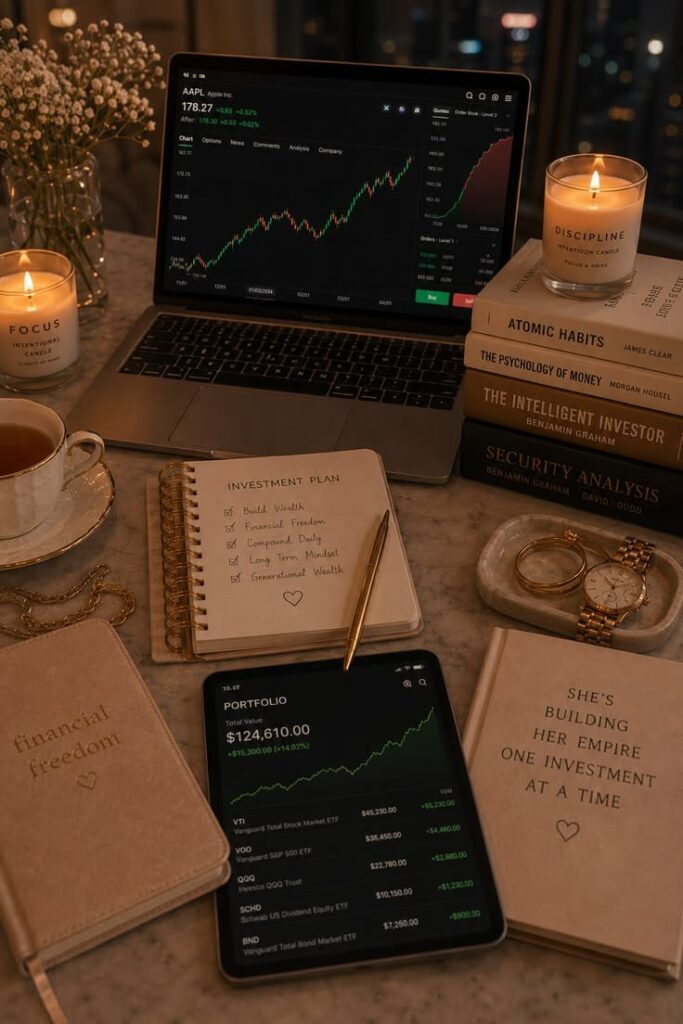
These funds give you instant, cost-effective diversification across hundreds of companies without requiring you to become a full-time analyst. For most people, a simple three-fund portfolio: a total U.S. stock market index, an international stock index, and a bond index is a smarter, more disciplined, and frankly less time-consuming way to build wealth than trying to beat the market with a concentrated basket of individual picks. That is not settling; that is being smart about where you allocate your most precious resource, which is your time and attention.
For me, the biggest mental shift came when I stopped treating my personal finances as a side project and started viewing them as a business I was managing. That sounds a little dramatic, I know, but think about it. If you were running a company, you would not ignore its cash flow statements or let its capital sit idle in a checking account earning nothing. Yet that is exactly what so many of us do with our own savings.
I started running a quarterly “earnings call” for myself, just a simple hour-long review where I check my asset allocation, evaluate my portfolio’s performance against relevant benchmarks, and decide if my risk tolerance still matches my current life stage. That small habit has done more for my net worth than any single investment decision I have ever made. Building a resilient investment portfolio is not about making one perfect trade; it is about consistent habits, regular rebalancing, and staying the course even when the market whispers doubt in your ear.
Another thing I have noticed is how many MBA graduates, myself included at one point, get paralyzed by the sheer number of choices available. There are thousands of mutual funds, endless ETFs, crypto, real estate, private equity, the list goes on. And with all that noise, it is easy to freeze up and do nothing. But I have learned that the best investment strategy is the one you can actually stick with.
For me, that meant accepting that I am not a day trader and I never will be. I embraced a dollar-cost averaging approach where I invest a fixed amount every month regardless of what the market is doing. Some months I buy high, some months I buy low, but over time, that consistent discipline smooths out the volatility and takes the emotional guesswork out of the equation.
I cannot tell you how liberating that feels, to stop obsessing over daily fluctuations and just trust the process that my MBA training taught me to respect in the first place. If you are reading this and feeling that same paralysis, my advice is simple: start small, start boring, but just start. Your future self will thank you.So, what is my honest opinion? The real financial value of an MBA is not the piece of paper. It is the discipline and the analytical framework.
The tools you use to assess a company’s balance sheet are the same tools you should use to assess your own financial health. Graduates who apply that same rigorous thinking to their own lives, rather than just their employer’s bottom line, put themselves in a position of immense strength over the long haul. It is about turning that academic exercise into real, tangible, personal success. And honestly, I think that is the most underrated return on investment you will ever get from business school. If you have the training, use it. Your portfolio is waiting.
References
U.S. Securities and Exchange Commission. (n.d.). Asset allocation and diversification. Investor.gov. https://www.investor.gov/introduction-investing/getting-started/asset-allocation
U.S. Securities and Exchange Commission. (n.d.). Beginners’ guide to asset allocation, diversification, and rebalancing. Investor.gov. https://www.investor.gov/additional-resources/general-resources/publications-research/info-sheets/beginners-guide-asset
U.S. Securities and Exchange Commission. (n.d.). Financial navigating in the current economy. https://www.sec.gov/investor/pubs/financialnavigating.htm