

 Posted by
 I have watched a lot of people pick an MBA program the way they picked their undergraduate college the first time around. They just look at the prestige of the name on the diploma, and frankly, I think that approach quietly wastes tens of thousands of dollars every single year. It is honestly a little painful to witness, because I have seen friends do this and then spend a decade wondering why their financial life feels so constricted.
Rankings are not useless, but they are only useful if you read them for the right information, and I think most applicants read them for the wrong thing entirely. This is really an ethics question in disguise, the same way ethics in business forces you to weigh short term appeal against long term consequences, except here the stakes are personal rather than corporate.
The estimated average cost of a top MBA program in 2026 sits around 203,000 dollars once you account for tuition, living expenses, healthcare, and fees, a figure that makes the decision far too expensive to base on brand recognition alone . Meanwhile, average tuition and fees for an MBA more broadly run closer to 14,160 dollars for state residents and 50,926 dollars for out of state students, a massive range that shows just how much program choice affects the final bill.
If you are only looking at a school’s position on a prestige list, you are missing the variable that actually determines whether the degree pays for itself. It is not just about getting into the best school; it is about picking a school that works for your specific financial reality.
Here is my opinion, stated directly. I think traditional MBA rankings, the ones built on peer surveys and recruiter opinion panels, are the least useful tool for a cost-conscious applicant because they reward name recognition rather than measurable outcomes. A more honest starting point is federal outcome data.
The United States Department of Education’s College Scorecard tracks real earnings and real borrowing for actual graduates rather than relying on self-reported school data or reputation surveys, which is exactly the kind of information a rankings list often buries or omits entirely. Organizations building newer ROI-focused rankings now draw primarily from Scorecard data, along with enrollment figures from the Integrated Postsecondary Education Data System and baseline earnings figures from the National Center for Education Statistics, to calculate how much a graduate’s income actually exceeds what they paid .
The numbers that come out of this approach are genuinely useful. To find the best value MBA programs, you really have to look past the usual suspects and dig into the return on investment per dollar spent, because a program with a lower total cost can sometimes leave you in a far better financial position than a brand name that costs twice as much.
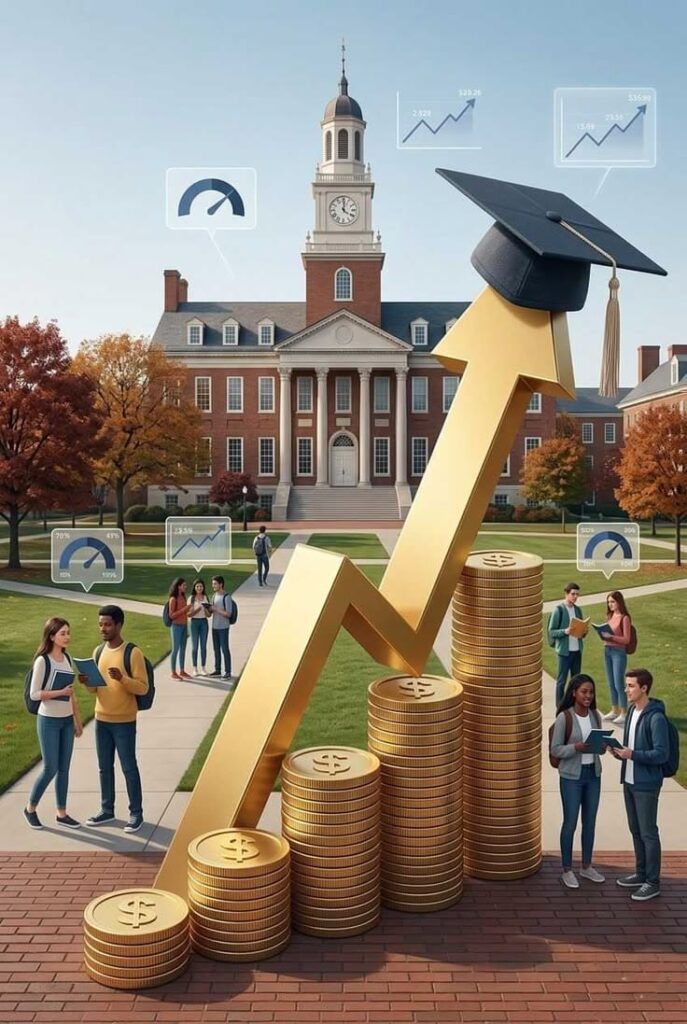
One ROI-focused analysis found that a program charging around 68,000 dollars in total cost produced graduates earning an average of 98,000 dollars, translating to a ten-year return on investment near 250 percent, a result that never would have shown up on a traditional prestige ranking since the school in question sat around twenty-fifth on that list . I find that absolutely fascinating. U.S. News calculates its own ROI figure by dividing average graduate earnings, including signing bonuses, by average student debt, which is a far more direct measure of value than a reputation score compiled from survey responses.
My advice, and I think this is the responsible way to use rankings rather than the lazy way, is to treat prestige-based lists as a starting point for identifying accredited, reputable programs, and then switch immediately to outcome-based data like Scorecard earnings, net price after aid, and debt-to-earnings ratios before making a final decision. A program’s name recognition might open a door in an interview, but it will not pay down your loan balance.
According to a 2024 survey by the Graduate Management Admission Council, more than three in four alumni reported that their MBA delivered positive financial returns within a few years of graduating, which tells me the degree itself is usually sound. The real risk is not the MBA. It is choosing the wrong program for your specific financial situation because a ranking told you to.
When you start looking at MBA cost comparison data, something interesting happens. You realize that the most expensive programs are not always the ones that generate the highest earnings relative to what you paid. Bloomberg recently did a deep dive into this, looking at something they call “Pareto efficiency” in business school rankings, which is basically a fancy way of saying they looked for programs where the combination of cost, return, and ranking hits a sweet spot .
What they found was that schools like the University of Georgia’s Terry College of Business or BYU’s Marriott School were delivering an incredible return per dollar invested, often outperforming elite schools on that metric even if their graduates did not earn the absolute highest salaries . I think that is the kind of information that should make any prospective student pause and rethink their assumptions.
I remember talking to a friend who went to a top-five program and is still paying off loans a decade later, while another friend went to a solid regional program, graduated debt-free because of scholarships, and is now making almost the same salary. It really made me question what we are all chasing when we obsess over rankings.
So when you are doing your research, look at the MBA tuition and fees for each school, factor in the cost of living, and then look at what graduates actually earn. That is the math that matters. And if you are looking for tools to help, the Department of Education’s College Scorecard is a great place to start. This whole process is about making a choice that sets you up for long-term success, not just impressing people at cocktail parties.
References
MBA.com. (2026, March 25). MBA return on investment (ROI) calculator. https://www.mba.com/business-school-and-careers/salary-and-roi/business-school-roi-calculator
Research.com. (2026, July 29). 2026 the ROI of an MBA: Calculating the value of your MBA. https://research.com/careers/the-roi-of-an-mba
U.S. Department of Education, College Scorecard. (n.d.). https://collegescorecard.ed.gov/
U.S. News & World Report. (2026, April 7). MBA ROI: 20 programs with the highest return for grads. https://www.usnews.com/education/best-graduate-schools/paying/slideshows/mbas-with-the-highest-return-for-grads-earning-100-000-plus