
 Posted by
 I have spent a lot of time thinking about leadership. Not just because I have written about it, or studied it, but because I have lived it. I have been the person in charge, and I have been the person trying to figure out why the person in charge made no sense at all.
Here is what I have learned: leadership is one of those topics where the volume of advice is inversely proportional to its usefulness. You know the feeling. You walk into a bookstore, and there they are rows of shiny books with bold fonts, each one promising to distill something deeply complex into a portable system.
Most of them capture something real, I will give them that. But none of them capture enough. So what does it actually take? Because let us be honest, if leadership were just about following a framework, we would have solved it by now. We would all be working in perfectly run organizations where people felt inspired every single day. But that is not reality, is it?
I remember early in my career watching a manager who was technically brilliant. He knew the product inside and out. He could answer any question. But the team around him was miserable. They did not grow. They did not take risks. They just waited for instructions.
And that is when it hit me: what actually separates effective leaders from ineffective ones is less a matter of technique and more a matter of character and judgment. And those things? They are much harder to teach.
The most durable insight from leadership research over the past several decades points to something interesting: the days of the heroic individual leader, that singular visionary around whom an organization orbits, are largely over as a useful model. We have seen this play out everywhere.
Research on distributed leadership, transformational leadership, and servant leadership has consistently pointed toward something more collaborative and more humble. The best leaders I have observed create conditions in which others can do their best work. They act as multipliers rather than centers of gravity.
But here is the tricky part. Humility is not the same as passivity. I learned this the hard way. Early on, I thought empowerment meant staying out of the way. I thought giving direction somehow diminished my team. And you know what happened? Confusion. Lots of it.
Organizational psychology backs this up: clear, consistent direction from leadership, what James March called the reduction of ambiguity, is a genuine organizational resource. People simply work better when they know what matters and why. A leader who avoids giving direction in the name of empowerment often produces confusion rather than autonomy.
The real art, as I see it now, is in communicating clearly without micromanaging the execution. That is a narrow path to walk. This article explores the balance between direction and autonomy, trust-building, and why leadership skills must adapt to different situations to be truly effective. I think about trust a lot.
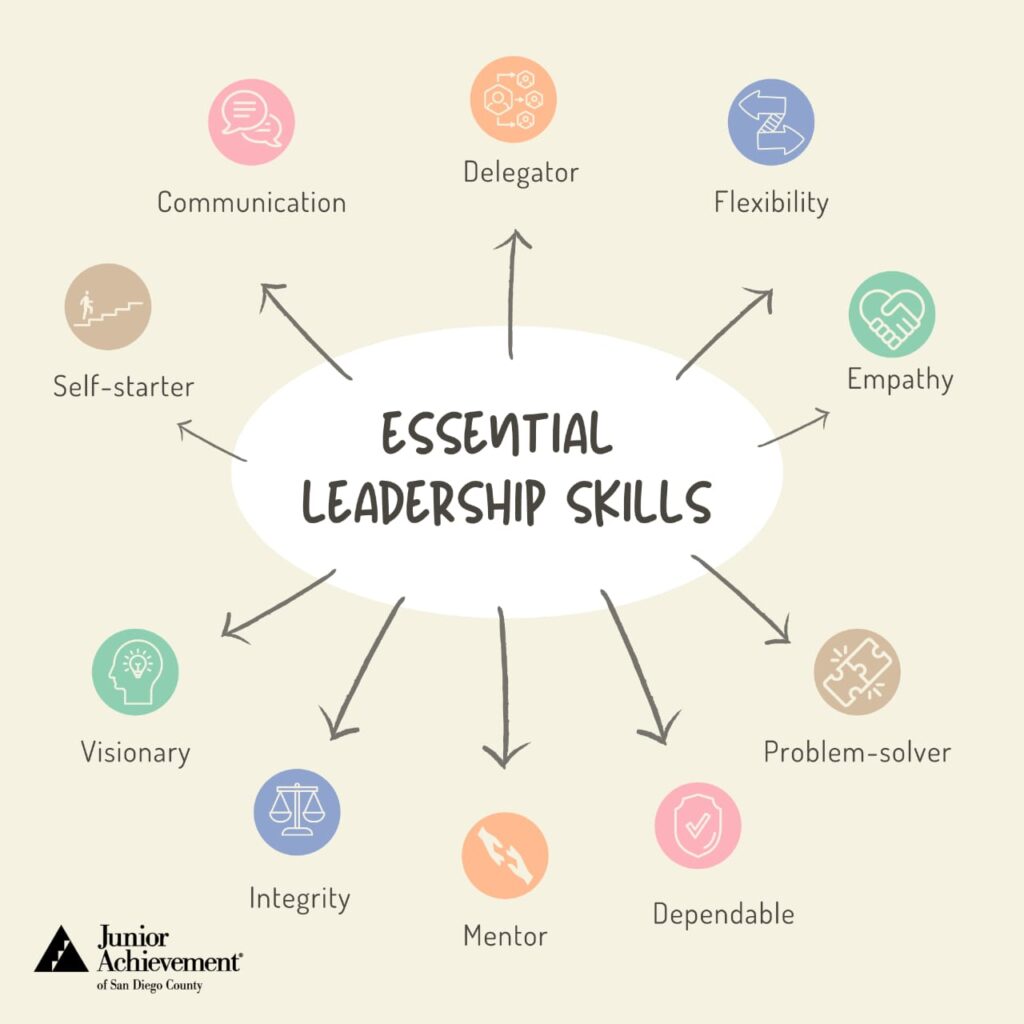
Because trust is where leadership ultimately lives. It is the mechanism through which influence flows. And it is built slowly, almost invisibly, and lost in an instant. I have seen leaders destroy years of trust with one moment of poor judgment. Research by Frances Frei and Anne Morriss identifies three drivers of trust: authenticity, empathy, and logical rigor.
When people believe a leader is genuinely who they present themselves to be, when they sense that leader cares about them, and when they can rely on that leader to reason carefully before acting trust accumulates. But when any of those three elements is visibly absent, it erodes. And people are far more alert to inauthenticity than most leaders realize. You cannot fake this stuff. People always know.
Here is another thing I have noticed. Leadership looks completely different depending on the situation. The behaviors that stabilize an organization during a crisis are not the same as those that drive innovation in a healthy one. I have made the mistake of using the wrong style at the wrong time. Crisis demands decisiveness, clear communication, and visible presence.
You need to be out front, calm, certain. But growth and innovation? That demands tolerance for ambiguity. It requires curiosity. It means letting good ideas come from anywhere, even if it bruises your ego a little. Leaders who learn only one register might be effective in some contexts, but they can be damaging in others. Versatility matters.
I suppose the most honest thing I can say about leadership is that it is a practice, not a credential. It does not begin with a title or end with one. I have met people with impressive titles who could not lead their way out of a paper bag. And I have met people with no formal authority who influenced everything around them simply by how they showed up.
Leadership is built through accumulated decisions. How you handle information that others do not have. How you respond when things go wrong. Whether you treat the person at the bottom of the hierarchy with the same attention as the person at the top. Those decisions, made consistently over time, are what leadership actually is.
And maybe that is why it feels so elusive. Because there is no finish line. There is no moment where you say, well, I am done learning that now. The context shifts. The people change. The challenges evolve. And you have to keep showing up, keep paying attention, keep adjusting. It is exhausting sometimes. But it is also work. The real work.
For those interested in going deeper into the research on trust and leadership effectiveness, I recommend looking at the work of Frances Frei, whose insights have shaped much of my thinking on this topic.
References
Burns, J. M. (1978). Leadership. Harper & Row. https://openlibrary.org/books/OL22822398M/Leadership
Frei, F., & Morriss, A. (2020). Begin with Trust. Harvard Business Review. https://hbr.org/2020/05/begin-with-trust
Heifetz, R., Grashow, A., & Linsky, M. (2009). The Practice of Adaptive Leadership. Harvard Business Press. https://www.hks.harvard.edu/publications/practice-adaptive-leadership-tools-and-tactics-changing-your-organization-and-world
Yukl, G. (2013). Leadership in Organizations (8th ed.). Pearson. https://www.pearson.com/en-us/subject-catalog/p/leadership-in-organizations/P200000005854/9780132771863
Spillane, J. P. (2006). Distributed Leadership. Jossey-Bass. https://www.wiley.com/en-us/Distributed+Leadership-p-9780787975890