

 Posted by
 I remember sitting in my first year law class, barely awake at 9 AM, when my professor said something that stuck with me. She looked around the room and asked if any of us had signed a contract that week. Nobody raised their hand. Then she smiled and said we were all wrong.
Every single one of us had probably entered into dozens of contracts without even realizing it. That moment changed how I saw the world around me. Discover why contract law affects your daily life more than you realize. Learn the basics of legal agreements, common mistakes, and what makes contracts binding.
Contract law is not just about thick stacks of paper with signatures at the bottom. It is the invisible framework that holds together nearly every interaction we have in modern society. When you grab coffee on your way to work, that is a contract.
When you download an app and click “I agree” without reading those terms and conditions, you just entered into a binding agreement. The lease on your apartment, your phone plan, even that freelance gig you took on the side all contracts.
But here is where it gets interesting. Most people walk through life completely unaware of the legal obligations they are creating and accepting every single day. I used to be one of those people. The thing about contract law is that it does not care whether you understood what you were agreeing to. Ignorance is not much of a defense when things go wrong.

At its core, a contract requires just a few basic elements. You need an offer, an acceptance, and something called consideration. That last one trips people up all the time. Consideration basically means that both parties have to exchange something of value. It does not have to be money it could be a service, a promise, or even giving up a right you previously had. Without consideration, you generally do not have an enforceable contract.
The beauty of contract law, if you can call it that, is how it tries to balance freedom with fairness. We want people to be free to make agreements without the government looking over their shoulder at every transaction.
At the same time, we need rules to prevent fraud, coercion, and situations where one party has so much more power that the agreement becomes fundamentally unfair. This tension runs through every contract dispute that ends up in court.
I learned this the hard way when I was younger. I signed up for a gym membership that seemed like a great deal at the time. Six months later, when I wanted to cancel because I was moving to another city, I discovered I had locked myself into a two-year agreement with penalties for early termination that would have cost me more than just finishing out the contract.
The sales person had glossed over those details, and I had not bothered to read the fine print. Classic mistake. But legally, I was bound by what I signed, not by what someone verbally told me the deal was.
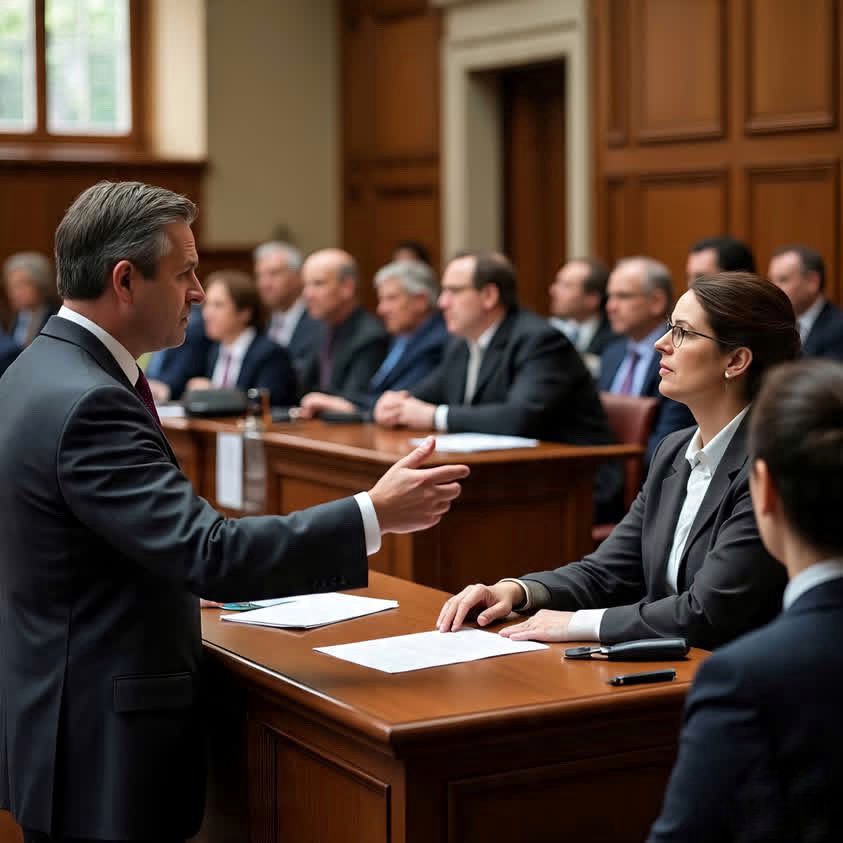
That experience taught me something valuable about how contract law actually works in practice. Courts generally assume that adults who sign agreements have read and understood them. There are exceptions, of course.
If someone literally held a gun to your head, that contract is not valid. If you were completely drunk or mentally incapacitated, you might have an out. If the other party committed fraud or made significant misrepresentations, you could potentially void the agreement. But absent those extreme circumstances, you are probably stuck with what you signed.
What fascinates me about this area of law is how it has evolved to handle new situations that nobody could have imagined when the basic principles were being developed. Think about cryptocurrency transactions, smart contracts on blockchains, or agreements made through artificial intelligence systems.
The fundamental principles of offer, acceptance, and consideration still apply, but courts are constantly wrestling with how to interpret them in contexts that feel completely foreign to traditional contract law.
Reference
Farnsworth, E. A. (2004). Contracts (4th ed.). Aspen Publishers.
Williston, S. (multiple editions). A treatise on the law of contracts. West Publishing Company.
Corbin, A. L. (1950–1963). Corbin on contracts: A comprehensive treatise on the working rules of contract law (Vols. 1–8). West Publishing Company. (Original work published in revised editions; subsequent editions edited by J. M. Perillo).