
 Posted by
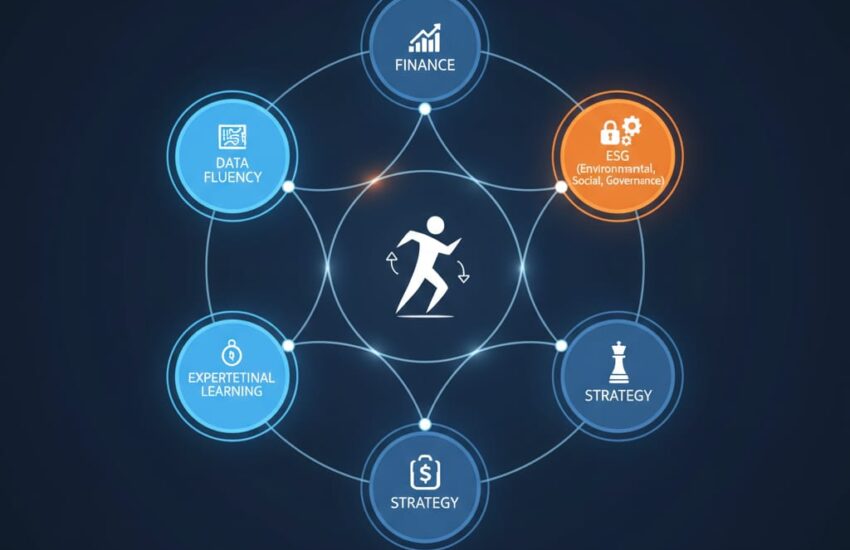
 Explore the latest trends in MBA programs. See how curricula are shifting to include tech fluency, data analytics, sustainability, and flexible formats for the modern business leader. The classic MBA curriculum, a standardized sequence of finance, marketing, operations, and strategy is undergoing a quiet revolution. The disruptive forces of technology, climate change, and social transformation have made it clear that business leadership requires a new kind of toolkit. Top business schools are no longer just tweaking reading lists; they are fundamentally redesigning their educational DNA to produce leaders who are as fluent in data science and ethical reasoning as they are in discounted cash flows. The journey through a modern MBA is becoming less about mastering a fixed canon and more about navigating a dynamic landscape of interconnected challenges, where agility and integrative thinking are the ultimate deliverables.
The most prominent shift is the move from elective to embedded integration of technology and data analytics. It is no longer sufficient to offer a standalone course in business analytics. Leading programs are weaving data-driven decision-making into the fabric of every core subject. A marketing class now demands analysis of large customer datasets to segment markets. A finance course incorporates algorithmic trading concepts and cryptocurrency markets. Operations management is taught alongside supply chain analytics and the Internet of Things. Furthermore, understanding the strategic implications of artificial intelligence, machine learning, and blockchain is moving from a specialized topic to a core competency. The goal is to produce graduates who are not just consumers of tech reports, but sophisticated partners who can dialogue with data scientists and engineers to drive innovation.
Parallel to this tech infusion is a profound expansion of the curriculum’s purpose beyond shareholder value. The concepts of Environmental, Social, and Governance criteria, stakeholder capitalism, and sustainable business models are now central pillars. Courses on corporate social responsibility have evolved into rigorous classes on measuring environmental impact, designing circular economies, and managing climate-related financial risk. Ethics is no longer a philosophical aside; it is a practical framework applied to dilemmas in AI bias, global supply chain labor practices, and disruptive market competition. This reflects a broader understanding that long-term profitability is inextricably linked to social license and planetary health, and that future CEOs must be architects of resilient, regenerative systems.
The structure of learning itself is transforming to foster this integrative, adaptive mindset. There is a decisive move away from isolated, functional silos toward experiential, project-based learning that mirrors real-world complexity. Students might work in cross-disciplinary teams on a live case for a company, tasked with developing a go-to-market strategy that includes a financial model, a digital marketing plan, an ESG impact assessment, and an implementation roadmap, all in one deliverable. Leadership development is also more experiential, focusing on emotional intelligence, managing diverse teams, and navigating change through simulations and coaching. This pedagogy cultivates the ability to synthesize disparate information and lead through ambiguity, which is the hallmark of effective modern management.

Finally, the very delivery of the MBA is becoming more personalized and accessible. While the full-time, two-year model remains prestigious, there is explosive growth in flexible formats. Executive MBAs for seasoned professionals, part-time hybrid programs, and modular online degrees are making the credential accessible to those who cannot pause their careers. This has given rise to the “stackable” credential model, where professionals can take shorter, focused courses in high-demand areas like digital transformation or business analytics, accumulating micro-credentials that can later count toward a full degree. This trend acknowledges that learning is a lifelong pursuit and that the business school’s role is to provide continuous, just-in-time education alongside the foundational degree.
Ultimately, these curriculum trends signal a redefinition of what business school is for. It is transitioning from an institution that transmits established knowledge to an agile studio that builds future-ready capabilities. The new MBA graduate is envisioned as a “T-shaped” leader: possessing deep analytical and functional expertise (the vertical bar of the T) combined with a broad capacity for collaboration, systems thinking, and ethical leadership across disciplines (the horizontal bar). By integrating technology, embracing purpose, prioritizing experience over theory, and offering flexible pathways, the modern MBA curriculum is striving to equip leaders not just to succeed in the world as it is, but to shape the world as it must become.
References
London School of Business and Finance. (2025, March 12). *How are MBA programmes adapting to changing work environments?*. Retrieved from https://www.lsbf.org.uk/blog/news/business-economy/how-are-mba-programmes-adapting-to-changing-work-environments
MBA London. (2025, April 16). *Trends in MBA programs: What’s changing in 2025?*. Retrieved from https://mbalondon.org.uk/news-blog/trends-in-mba-programs-whats-changing-in-2025/
London Training and Employment. (2025, September 11). *6 ways MBA programs have changed recently*. Retrieved from https://www.londontfe.com/blog/6-ways-mba-programs-have-changed-recently
Genixo Education. (2025, May 14). *MBA trends 2025: The degrees, destinations & domains dominating this year*. Retrieved from https://www.genixoeducation.com/blogs/mba-trends-2025-the-degrees-destinations-and-domains-dominating-this-year
European Institute of Management and Technology. (2025, March 27). *The future of MBA: Evolving curriculum and trends*. Retrieved from https://www.eimt.edu.eu/the-future-of-mba-evolving-curriculum-and-trends