
 Posted by
 Thinking about franchising? I share what I learned about franchise fees, contracts, and royalty payments before almost buying my own franchise business. A few years back, I sat in a parking lot outside a sandwich shop, engine off, staring at a franchise disclosure document thick enough to stop a door, wondering if I had any business signing my name to it. That is usually how franchising starts for most people, not with some grand business plan but with a moment of curiosity that turns into a rabbit hole.
I had a little money saved, a friend who kept telling me franchising was the safest way into business ownership, and absolutely no idea what I was getting into. Looking back now, I think that confusion is exactly why so many people either rush into a franchise opportunity or talk themselves out of it before they even understand what it actually involves.
Franchising, at its core, is really just renting somebody else’s proven system. You are not inventing a new sandwich or a new oil change process; you are paying for the right to use a brand, a playbook, and usually a fair amount of hand-holding. The franchisor hands you the blueprint, and in exchange, you pay an initial franchise fee plus ongoing royalty fees, typically a percentage of your monthly revenue. Sounds simple enough on paper, right? But the moment you start digging into actual franchise agreements, you realize how much variation exists between brands, industries, and even individual locations within the same chain.
What surprised me most during my own research was how much the relationship between franchisor and franchisee resembles a long-term marriage more than a typical business transaction. You are bound by contract for years, sometimes a decade or longer, and you cannot just walk away if you decide halfway through that you do not like how marketing decisions get made at the corporate level. I remember asking a current franchise owner, somewhat naively, whether she could just change her menu if local customers wanted something different. She laughed at me. Apparently, that kind of independence is exactly what you give up when you buy into a franchise system, and depending on your personality, that tradeoff either sounds comforting or absolutely suffocating.
There is a reason franchising appeals to a certain kind of entrepreneur, though, and I do understand the pull. When you buy into an established franchise opportunity, you are skipping a lot of the trial and error that sinks so many independent small businesses. Supply chains are already negotiated. Training programs already exist. Customers in a new city might recognize your logo before you even open the doors. For someone who wants to own a business but does not necessarily want to invent one from scratch, that head start can be worth quite a lot, even after accounting for the franchise fees eating into your margins.
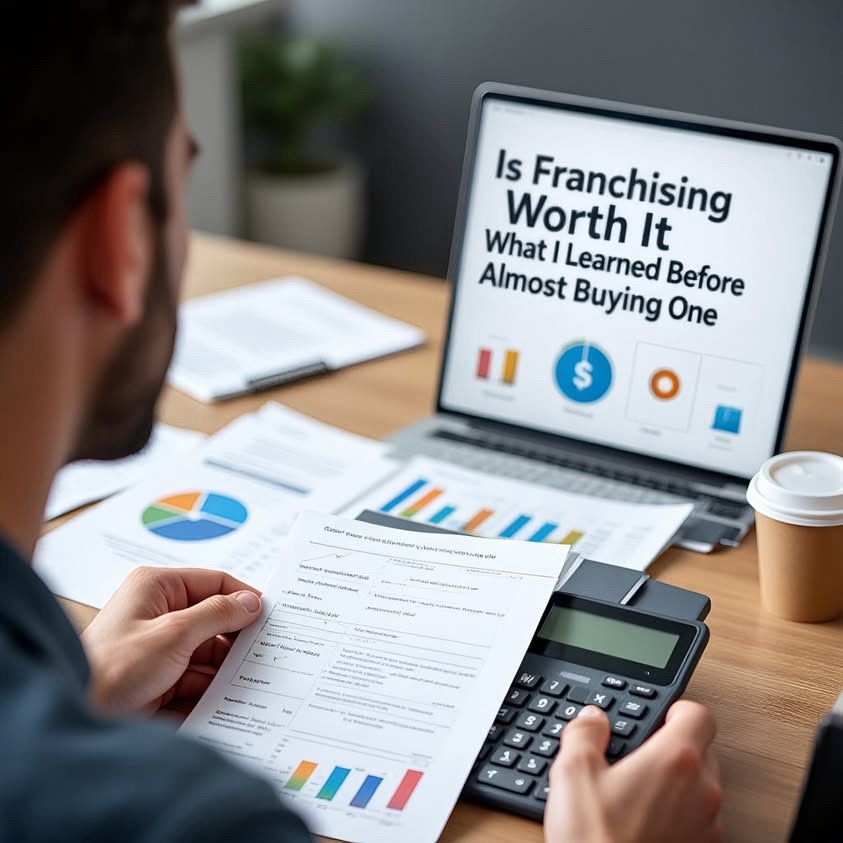
Still, I would be lying if I said the financial side did not give me pause. Initial investment costs for franchising can range from a modest sum for a home-based service franchise all the way up to seven figures for a full restaurant build-out with real estate included. Add in royalty payments, advertising fund contributions, and the equipment upgrades that franchisors love to mandate every few years, and the actual cost of ownership stretches well beyond that initial sticker price. Anyone seriously considering a franchise investment owes it to themselves to read the financial performance representations section of the disclosure document slowly, more than once, maybe with a calculator and a strong cup of coffee nearby.
I never did sign that agreement in the sandwich shop parking lot, by the way. Something about the territory restrictions felt too limiting for what I wanted at the time, and I walked away. That does not mean franchising was a bad idea, only that it was not the right fit for me in that particular season of life. Plenty of people thrive within a franchise system precisely because the structure removes so many of the guessing games that come with starting a business from zero. Others feel boxed in by the same rules that someone else finds reassuring.
If you are weighing franchising as your path into business ownership, my honest advice is to talk to existing franchisees before you talk to anyone selling you on the opportunity. Ask them what they wish they had known, ask about cash flow during the slow months, ask whether corporate actually listens when problems come up. Franchising is not magic, and it is not a shortcut either, but for the right person with the right temperament, it can be a remarkably steady way to build something of your own while still having a map to follow.
Reference
Bui, T. T. H., Jambulingam, M., & Amin, M. (2022). A literature review of franchisee performance: Insights for further research. Cogent Business & Management, 9(1), Article 2044573. https://doi.org/10.1080/23311975.2022.2044573
Navarro Sanfelix, G. (2019). New challenges in franchisor–franchisee relationship: An analysis from an agency theory perspective. TEC Empresarial, 14(1), 40–53.
U.S. Small Business Administration. (n.d.). SBA franchise directory. U.S. Small Business Administration. Retrieved June 19, 2026, from https://www.sba.gov/franchise-directory